
Damp Proof Course (DPC Injection) Dublin
Damp Proof Course
At Damp Proofing Dublin, we provide professional damp proof course and DPC injection services for properties throughout Dublin. Our experienced team can assess suspected rising damp, identify potential problems with the existing damp-proofing and recommend an appropriate remedial solution.
DPC injection can be an effective method of creating or restoring a moisture barrier within affected walls. However, the correct treatment depends on the construction and condition of the property, which is why proper assessment is an important first step.
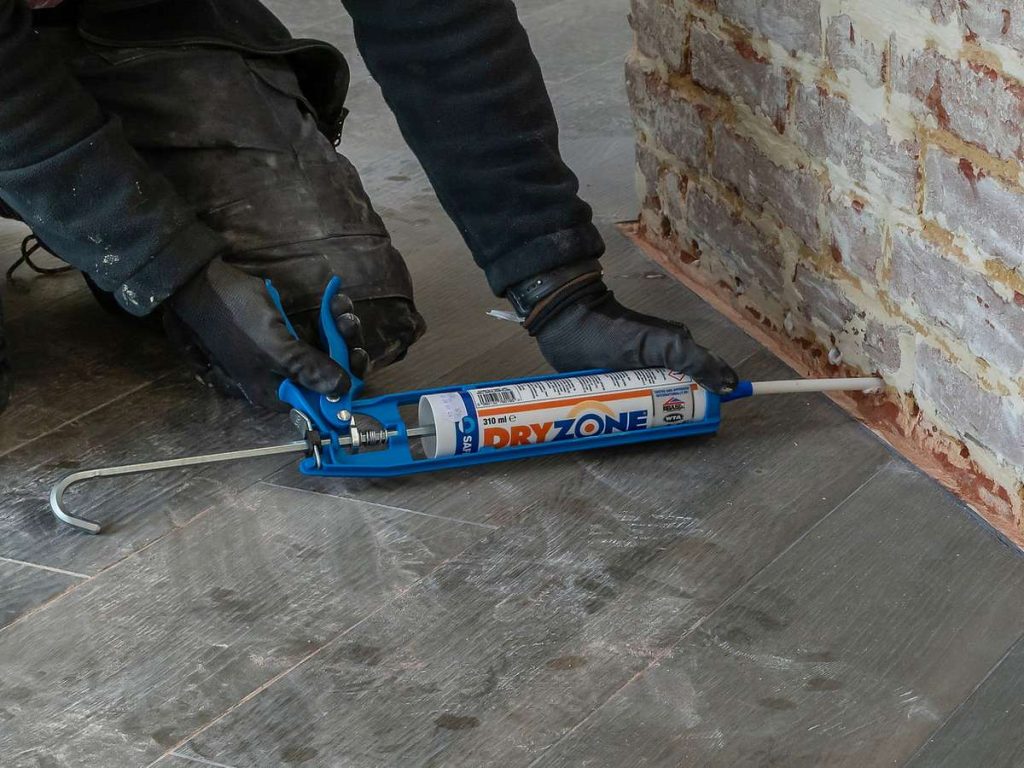
DPC Injection Dublin
DPC injection is a commonly used remedial damp proofing method for walls affected by rising moisture. It involves introducing a specialist damp-proofing treatment into the masonry to create a moisture-resistant barrier. The exact application method will depend on the construction of the wall and the system being used. Injection points are generally created along a suitable horizontal line within the affected wall, allowing the treatment to form a barrier intended to restrict further moisture movement.
DPC injection can be suitable for a range of masonry constructions, although every property should be assessed individually before treatment. Our team can examine the affected areas, consider the construction of the building and determine whether a remedial DPC is an appropriate option.
Chemical Damp Proof Course
A chemical damp-proof course is one method used to address rising damp where an existing DPC is absent or ineffective. The treatment is introduced into the wall to create a barrier against moisture travelling upwards. Depending on the property, additional remedial work may be required to deal with damaged plaster, salts or other effects caused by prolonged damp.
Installing a new DPC is not simply about treating visible damp patches. The underlying source of moisture needs to be considered, along with factors such as external ground levels, drainage, wall construction and any potential bridging of the existing damp-proof course. A professional assessment helps ensure that the correct treatment is selected for the building.
What Is a Damp Proof Course?
A damp-proof course is a horizontal barrier incorporated into a building to help prevent moisture from the ground travelling upwards through walls. In a properly functioning building, the DPC helps stop groundwater from being absorbed into the masonry above the barrier. If the DPC is missing or defective, moisture can potentially move upwards through the wall by capillary action.
Many older properties may have different forms of damp-proofing compared with modern buildings. A DPC can also become compromised if external ground levels have been raised, render bridges the course or building alterations allow moisture to bypass the barrier. When signs of rising damp appear, checking the condition and position of the damp-proof course can help determine the most appropriate solution.
What Is a Damp Proof Course?
Signs You May Need DPC Injection There are several signs that may indicate a problem with the damp-proofing of your property. These can include:
- Damp patches along the lower sections of walls
- Peeling, bubbling or blistering paint
- Crumbling or damaged plaster
- White or powdery salt deposits
- Flaking wallpaper
- Damp or deteriorating skirting boards
- A musty smell
- Moisture that appears to rise upwards from floor level
- Persistent damp that does not improve with ventilation
These symptoms do not automatically mean that the property has rising damp or requires DPC injection. Condensation, penetrating damp, plumbing leaks and other moisture problems can produce similar signs. For this reason, identifying the source of the moisture should come before deciding on a particular treatment.
Request a Free Quote
DPC Injection for Older Dublin Properties
Older Dublin properties can present particular challenges when dealing with damp. Different construction methods, solid walls, previous renovations and changes to external ground levels can all affect how moisture behaves within a building.
A damp problem in an older property should therefore be assessed in the context of the building’s construction rather than assuming that one treatment will suit every situation.
Our damp proofing specialists can assess the affected areas and provide advice based on the individual property and the likely source of moisture.

Basements and below-ground areas can be particularly vulnerable to water ingress. Moisture entering through walls or floors can result in damp conditions, mould growth and damage to internal finishes.
We provide basement waterproofing and tanking solutions designed to help protect below-ground areas from water penetration. The appropriate method will depend on the construction of the building, the source of the moisture and the condition of the affected area.
Professional assessment is important when dealing with basement damp because water can enter through several different routes. A suitable waterproofing system can help create a more effective barrier against moisture and make the space more suitable for use.

Historic brick damp repairs in Dublin address the unique moisture challenges faced by Georgian, Victorian, and Edwardian solid-wall properties.
Traditional Dublin brickwork was crafted using soft, porous clay bricks bonded with flexible, vapor-permeable lime mortars.
Unlike modern cavity walls, these historic solid structures rely on continuous breathability to absorb and evaporate moisture naturally.
How DPC Injection Works
The precise process will depend on the construction of the affected wall, but DPC injection generally involves treating the masonry at a suitable horizontal level.